Live Over Porto: ‘let’s find a crane’
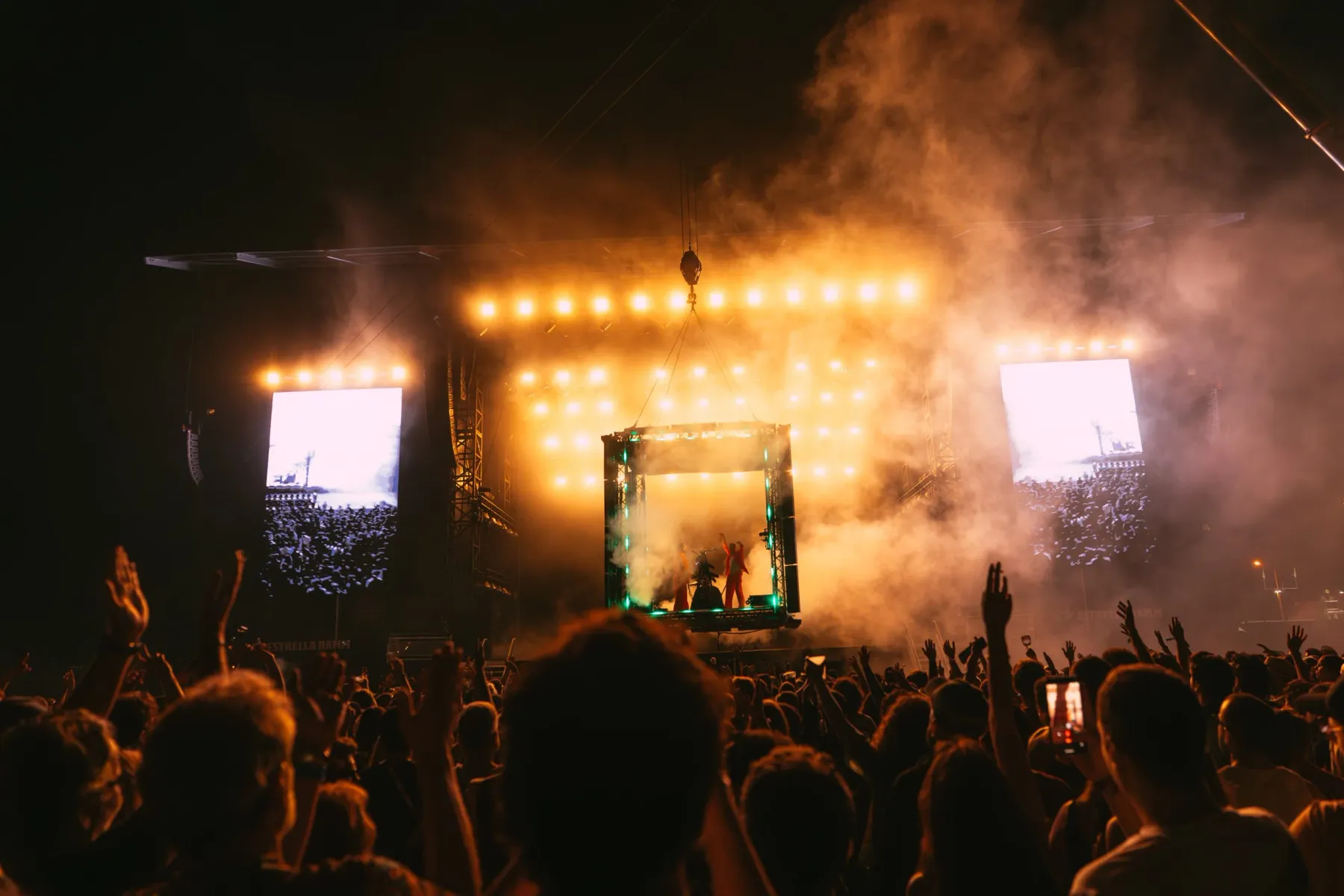
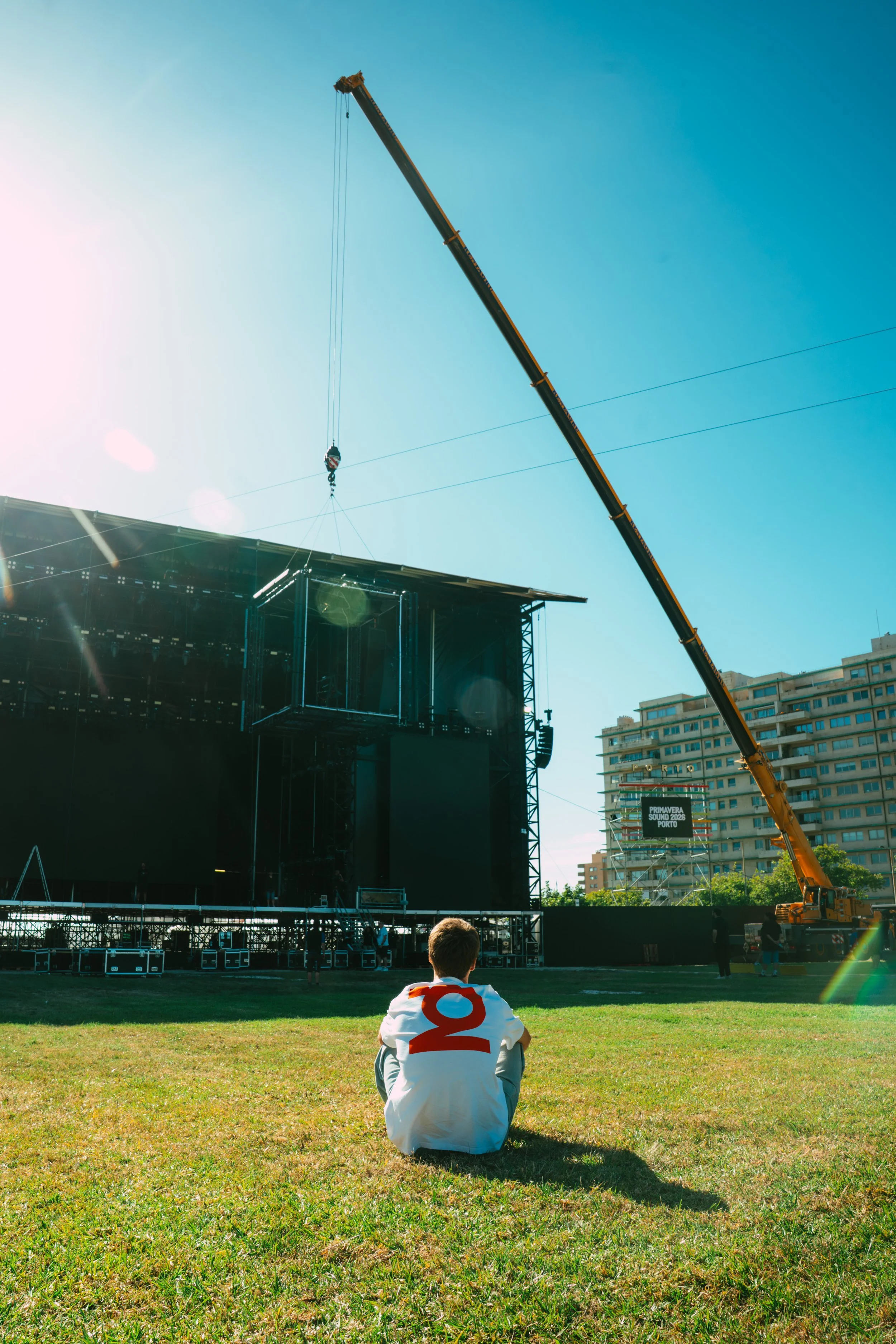
The brief from Primavera Sound Porto fit in one line: do a floating show again, this time over a live audience. On Saturday 13 June 2026, right after Massive Attack, we closed the main stage from a cage hanging off a crane, hovering above the crowd. Live Over Porto is the full set, filmed in a single take.
The idea
Primavera had seen Live Over Lisbon, the video concert we filmed at sunrise on a crane over the Tejo, playing music from our debut album Sudden Light. Their question was simple: would we do it again, with an audience under us?
Our answer was simpler: yes, let’s find a crane.
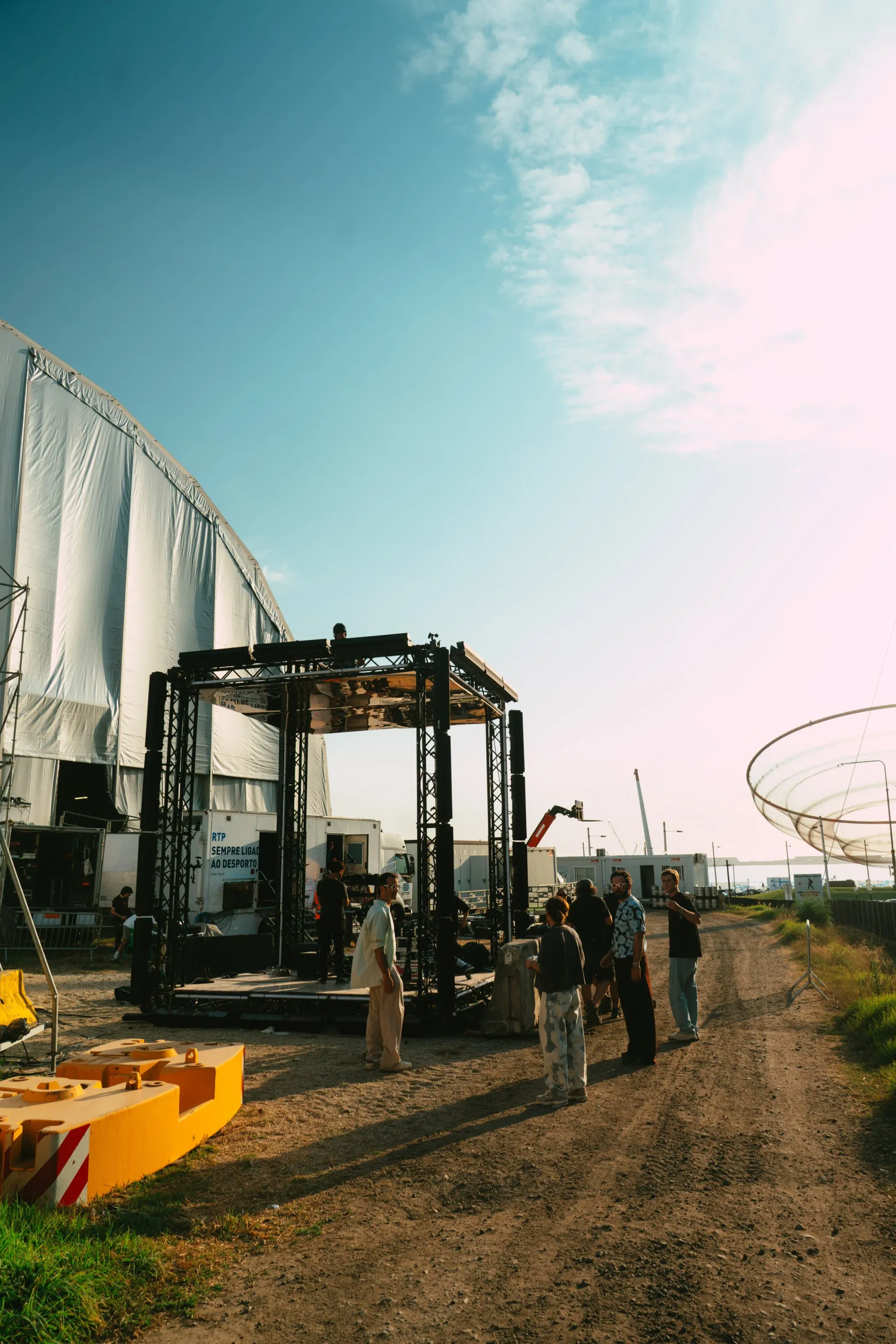
We sat down with the festival’s architecture team to work out where a crane could stand and how it could reach the dancefloor. We settled on the closing slot of the Saturday, on the main stage, and got to work.
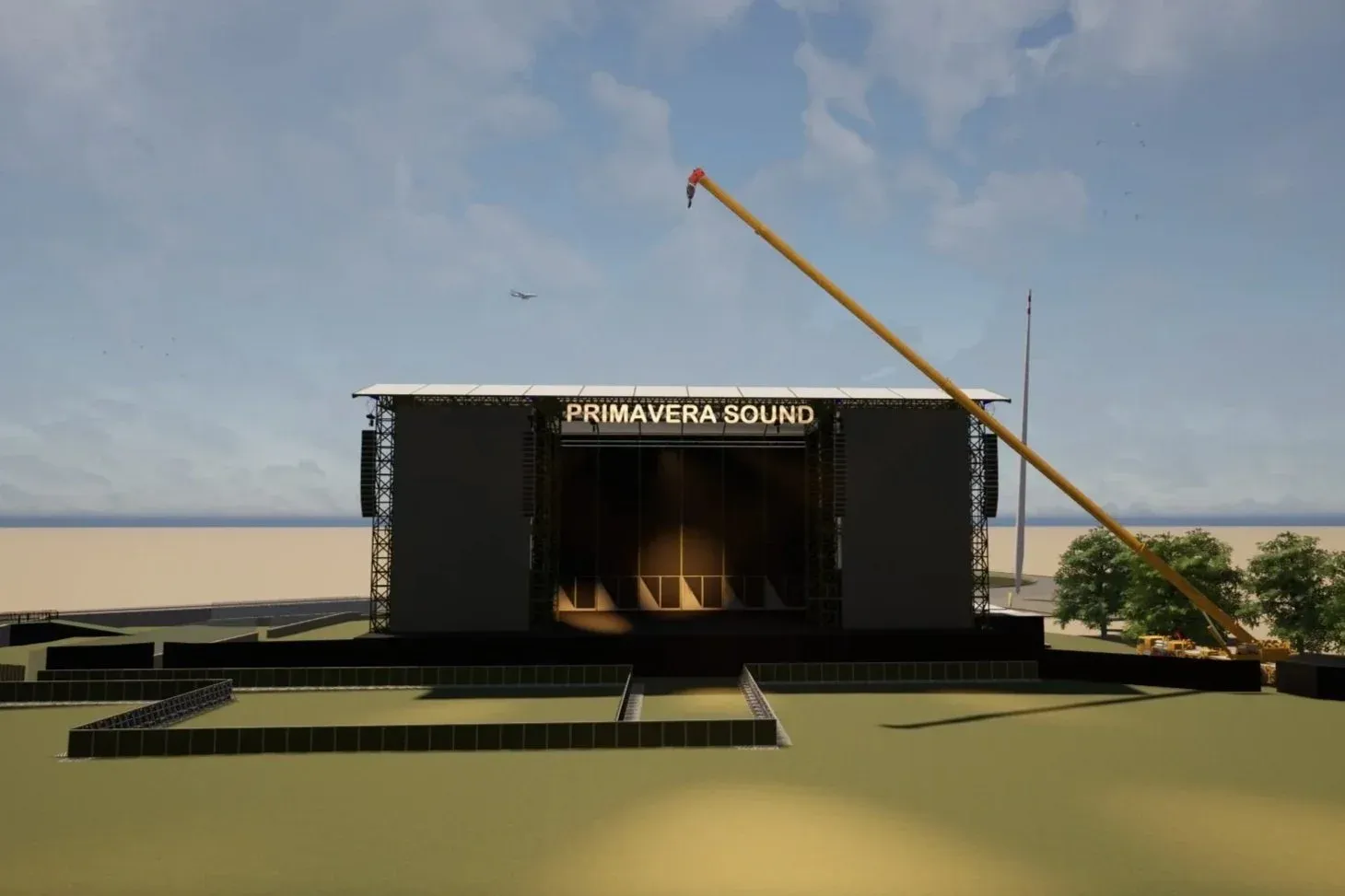
The cage
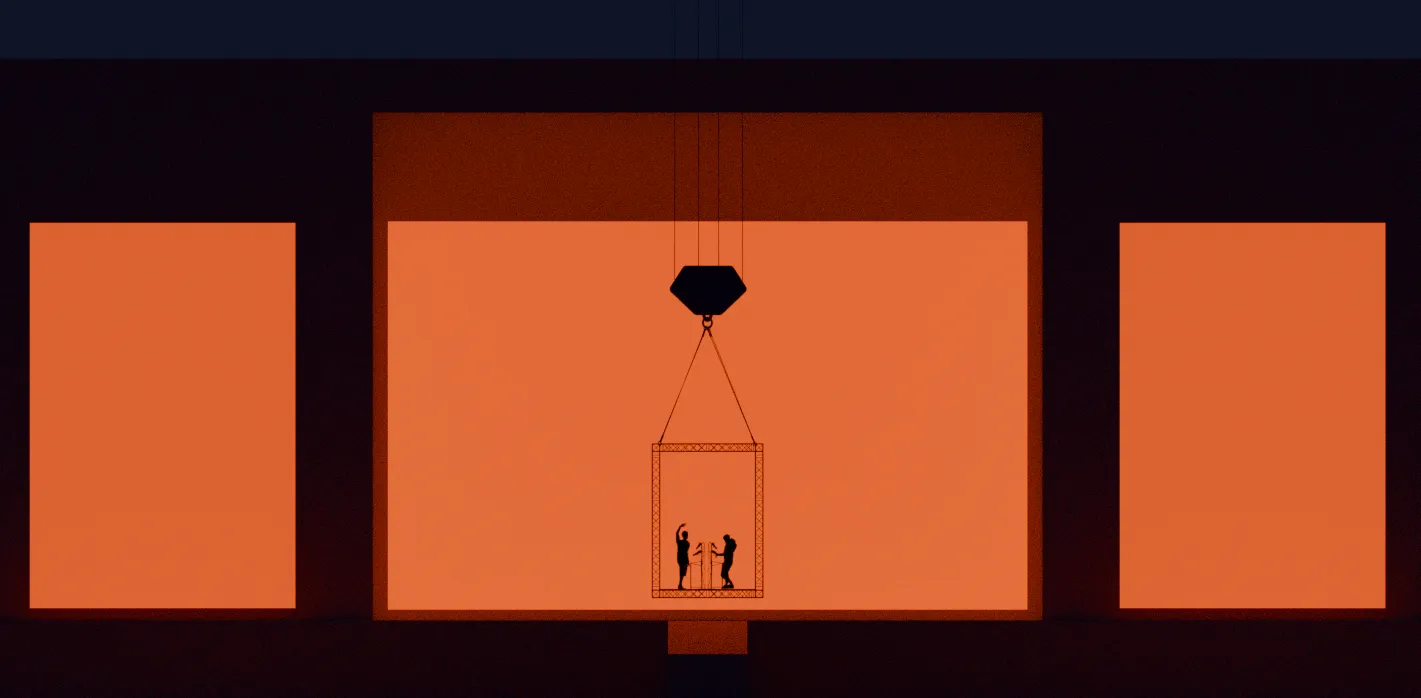
We asked Pavel Zmunchila, the Lisbon-based set, lighting and visual designer, for a floating stage. Two things mattered: making the most of being above the audience, and using the main-stage screens as our backdrop.
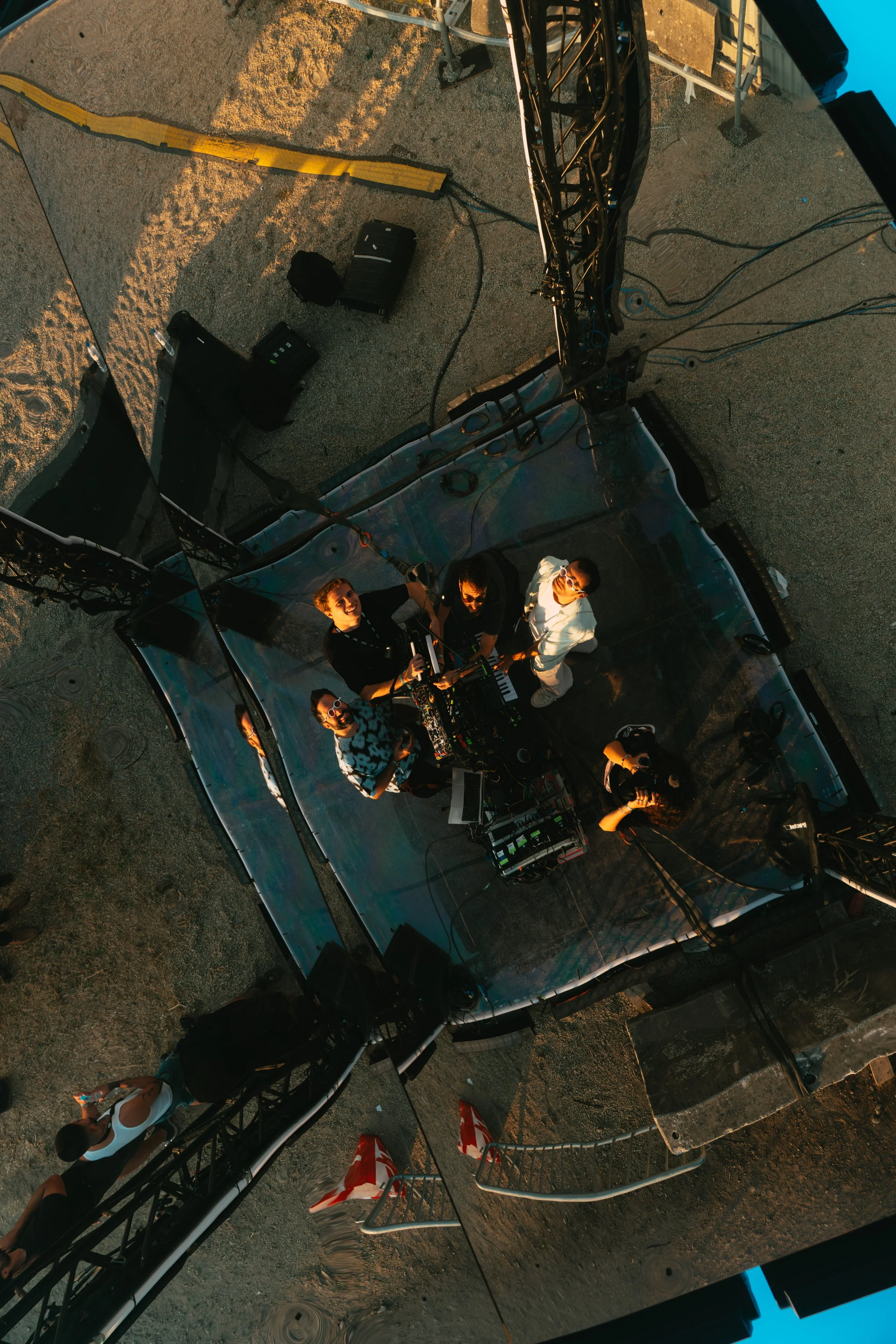
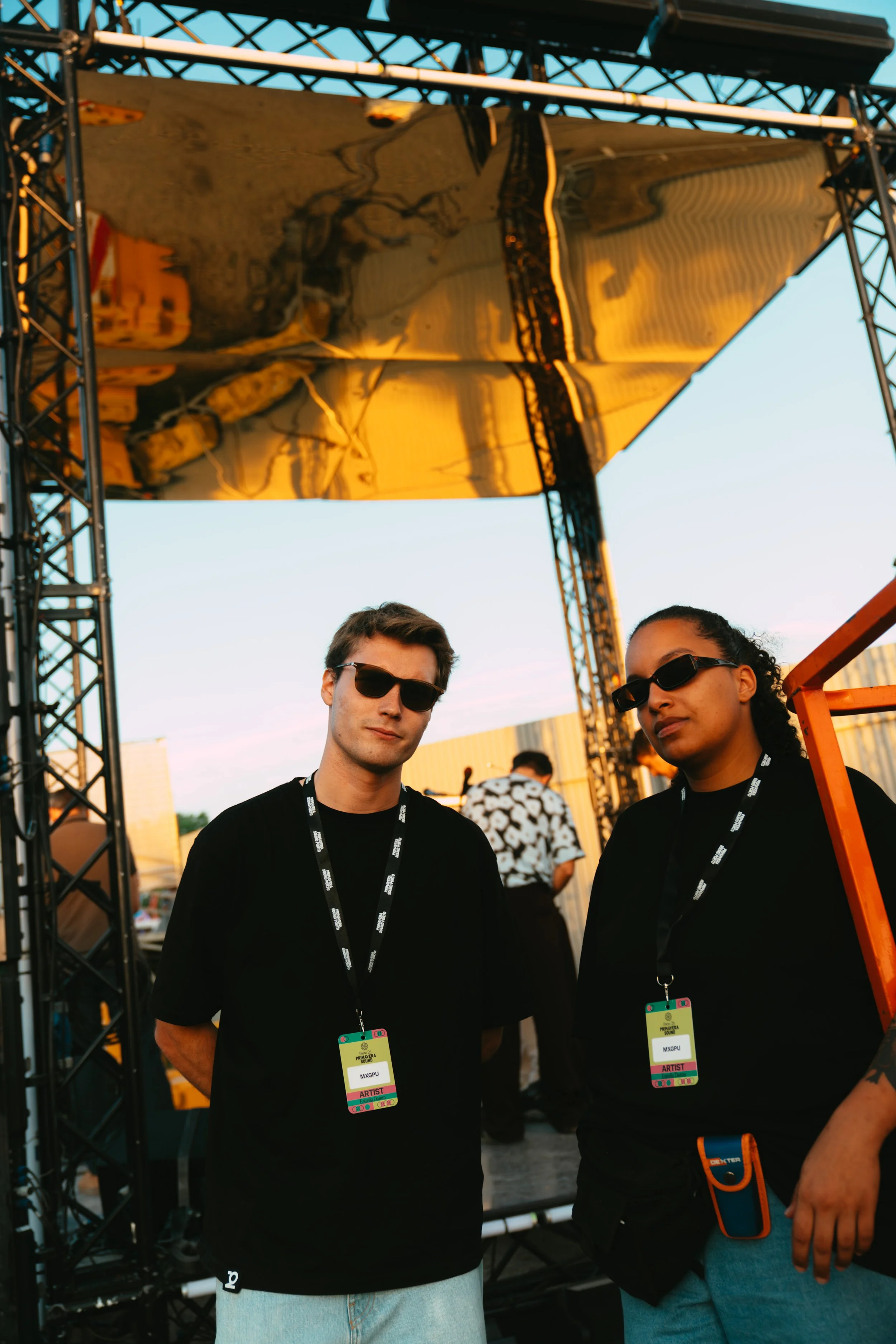
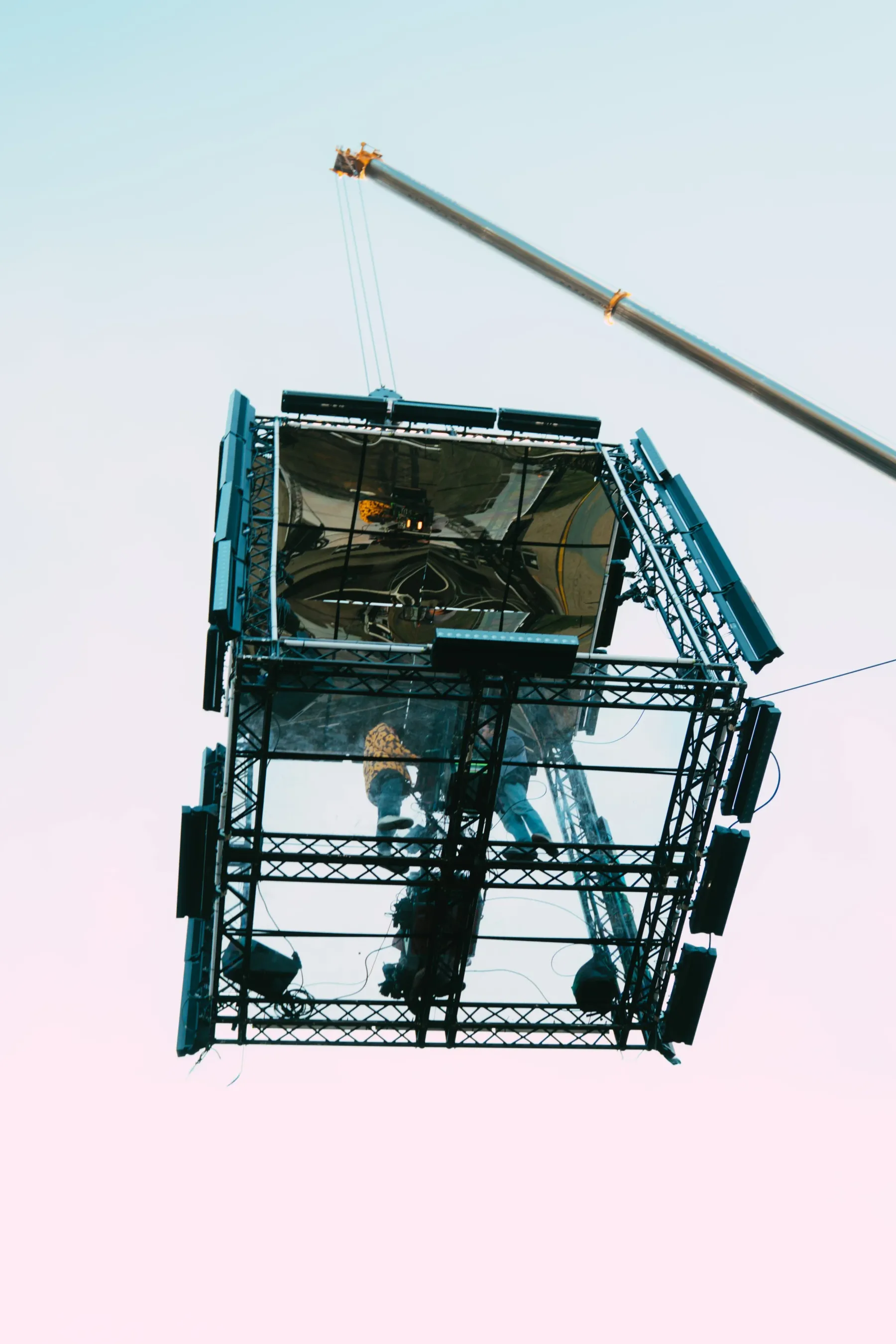
He came back with a cage. A box structure loaded with fixtures, a mirrored ceiling and a see-through floor. We could look down at the crowd, and the crowd could look straight up into the cage.
The visuals
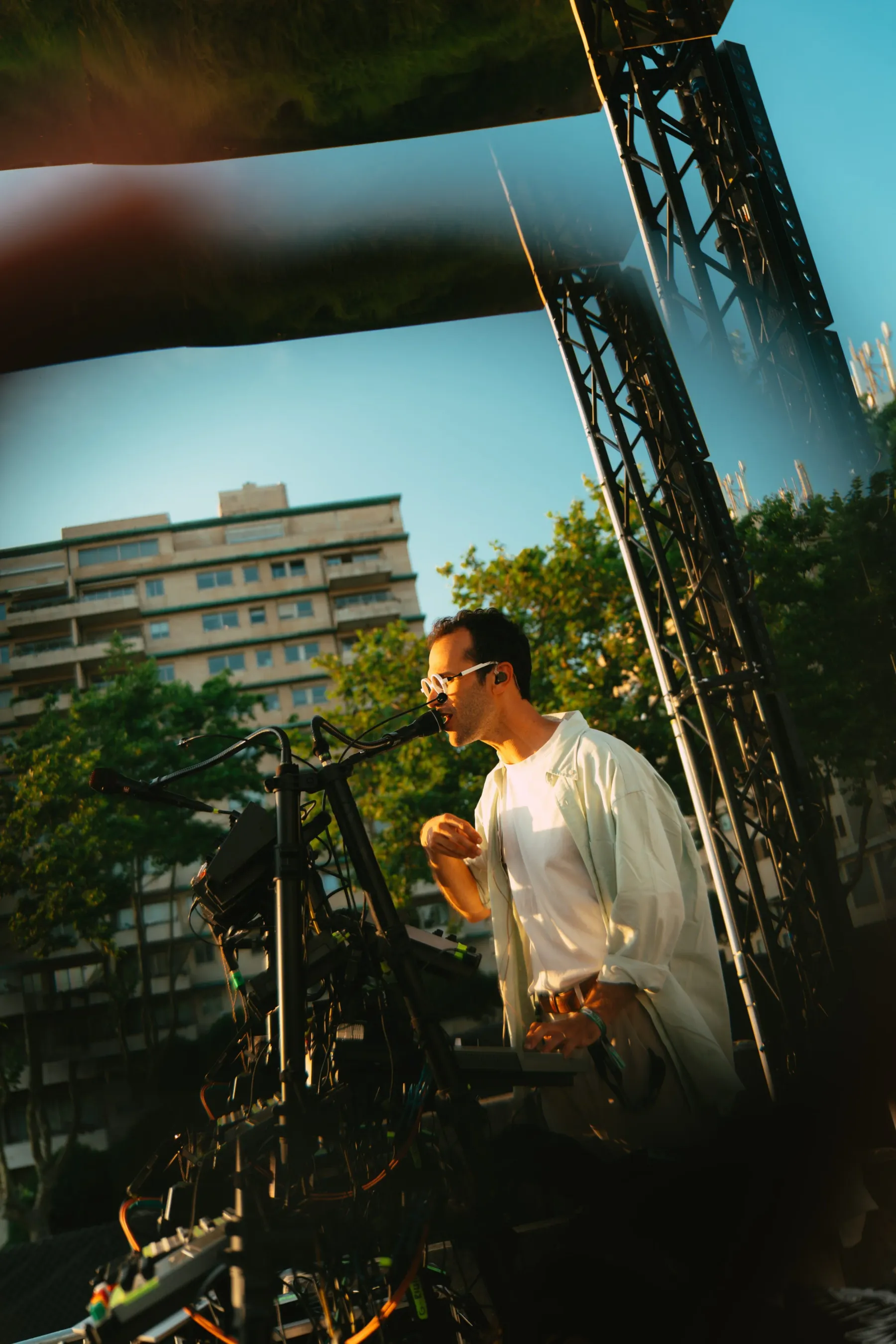
Because we had the main-stage screens, video became part of the show. We built the visuals from scratch with Pavel, in a custom TouchDesigner system, with a different scene for every song, each with its own visual language.
Many scenes used live cameras: PTZ cameras mounted on the cage, cameras on the floor, and the feed from RTP, who were broadcasting the concert. Tapping into RTP’s feed meant we could run visuals and live video side by side on the main screen and the IMAG screens. João Quintela programmed and ran the lights, with Isaac Veloso assisting.
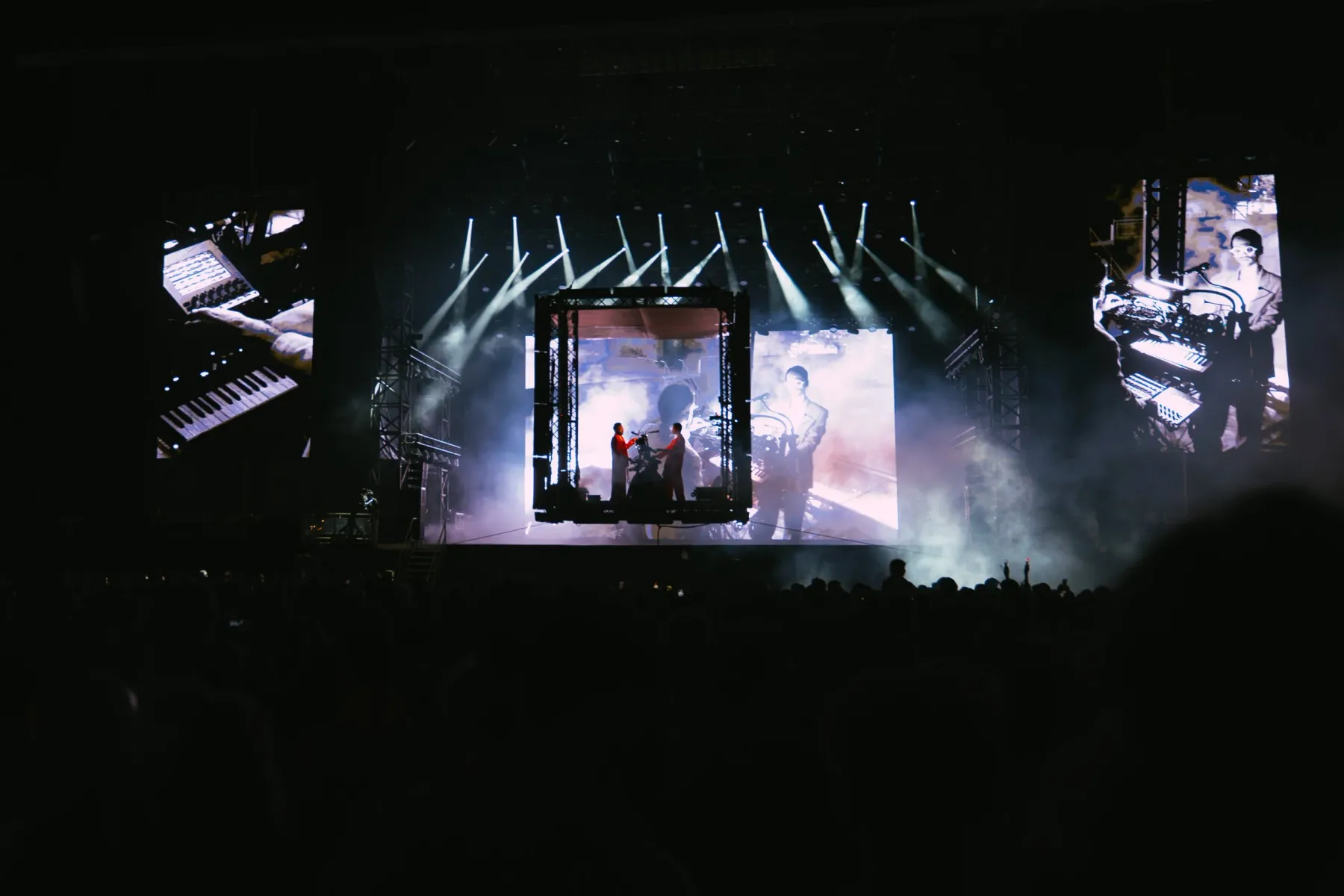
Live video details, with closeup and PTZ camera feeds both on IMAG and main screen.
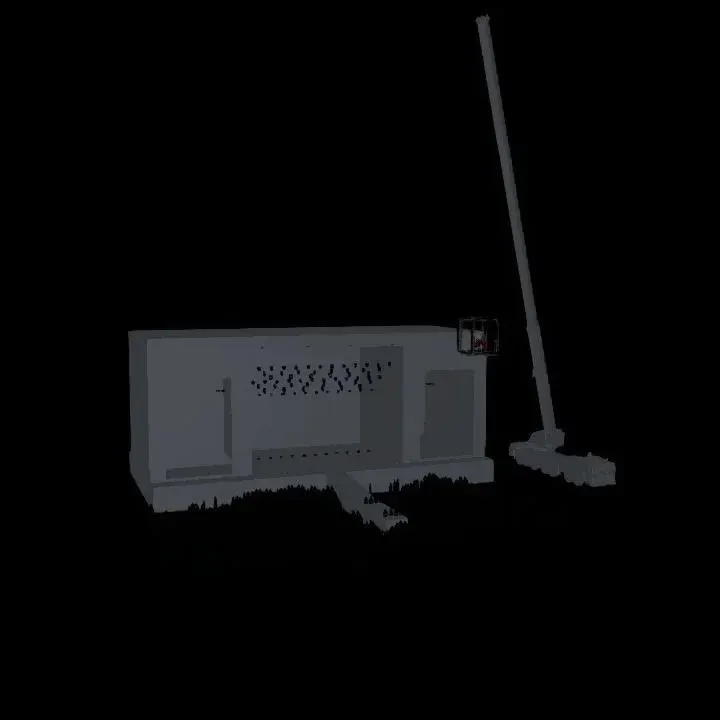
Capture previz with the crane
Rehearsing a crane in a studio
After a few technical visits to the site, we spent four weeks building the whole show in simulation in Capture.
We replicated the crane’s movements in the studio and put them on DMX. On the night the crane was operated by hand, but having it in the simulation let us rehearse the entrance, the arrival and the exit with the lighting and video team, cue by cue.
The day before the festival opened we did a full rehearsal on site. We went up in the afternoon and checked the wind. It was stable.
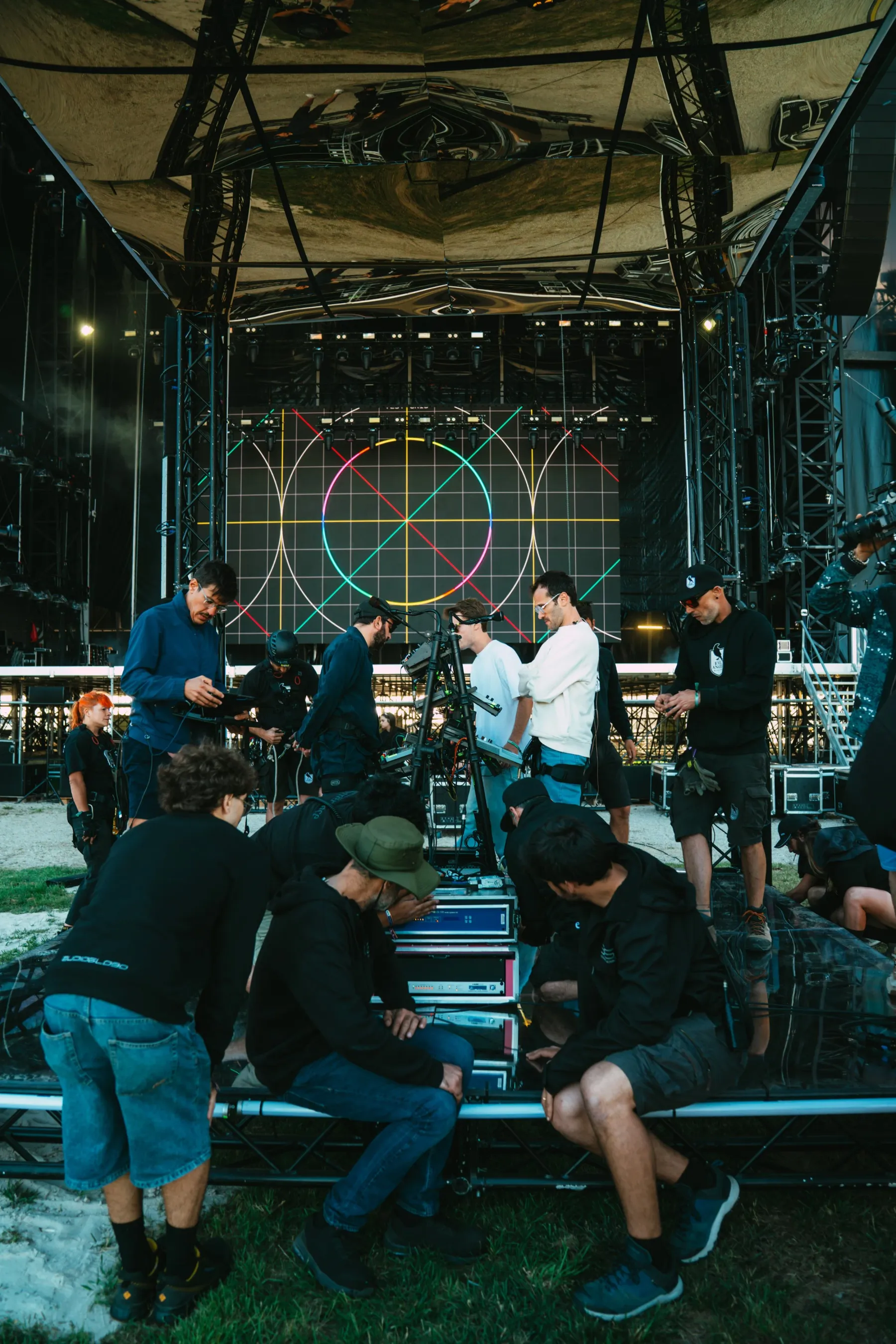
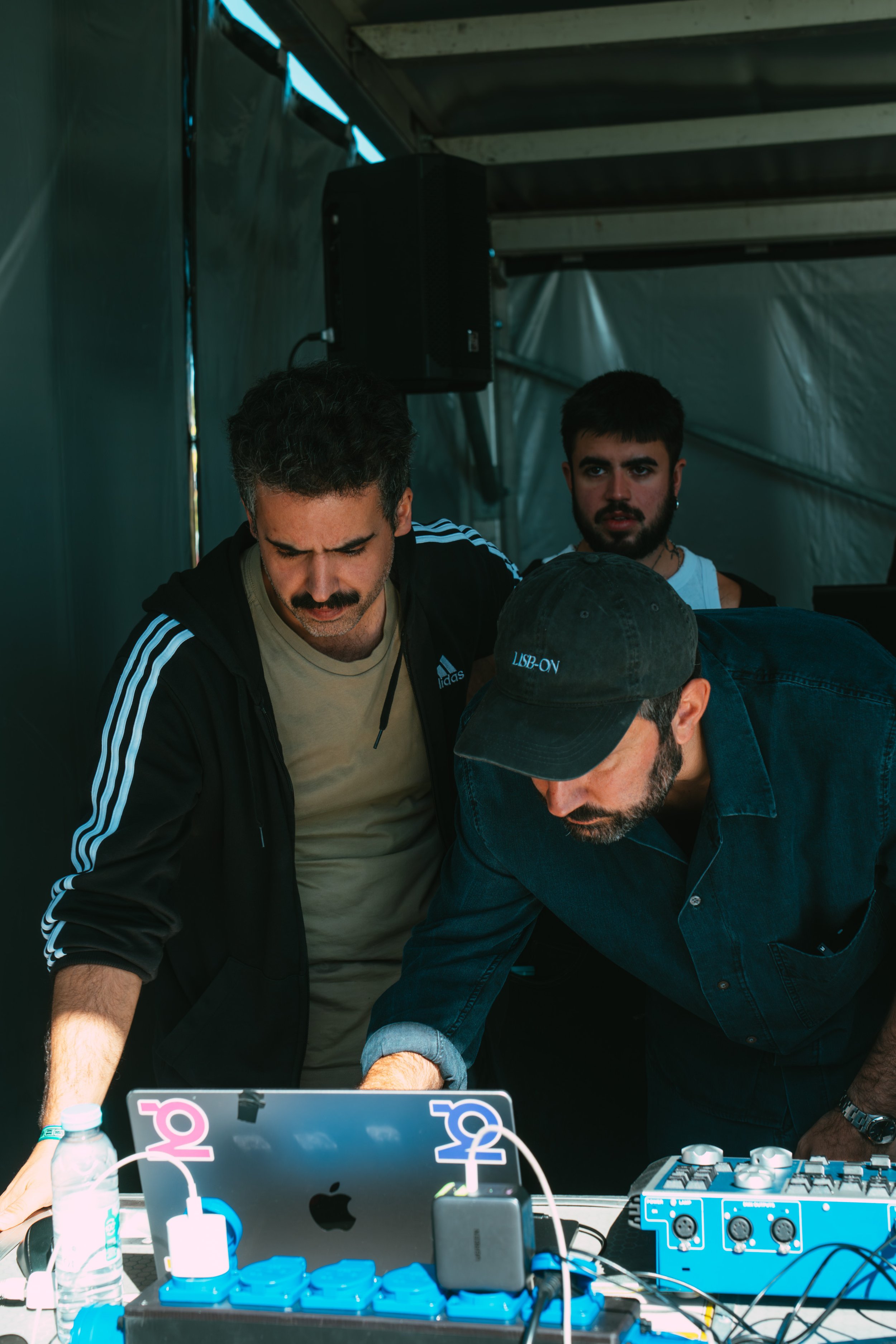
Network troubleshooting by a lot of people: it did get fixed.
Signal flow
Everything in the cage had to reach the ground, and come back, through one crane arm.
Signals between the cage and the ground:
Control network for the lighting desk: ipMIDI
Control network for the visuals engine: ipMIDI
Live video from the PTZ cameras to the visuals engine: NDI
Audio, converted from analog to digital and sent down via fibre to FOH
Talkback microphone to FOH
Radio to the whole team
Audio signal path:
Ableton → RME → analog outs → AES50 → fibre → FOH desk → main PA
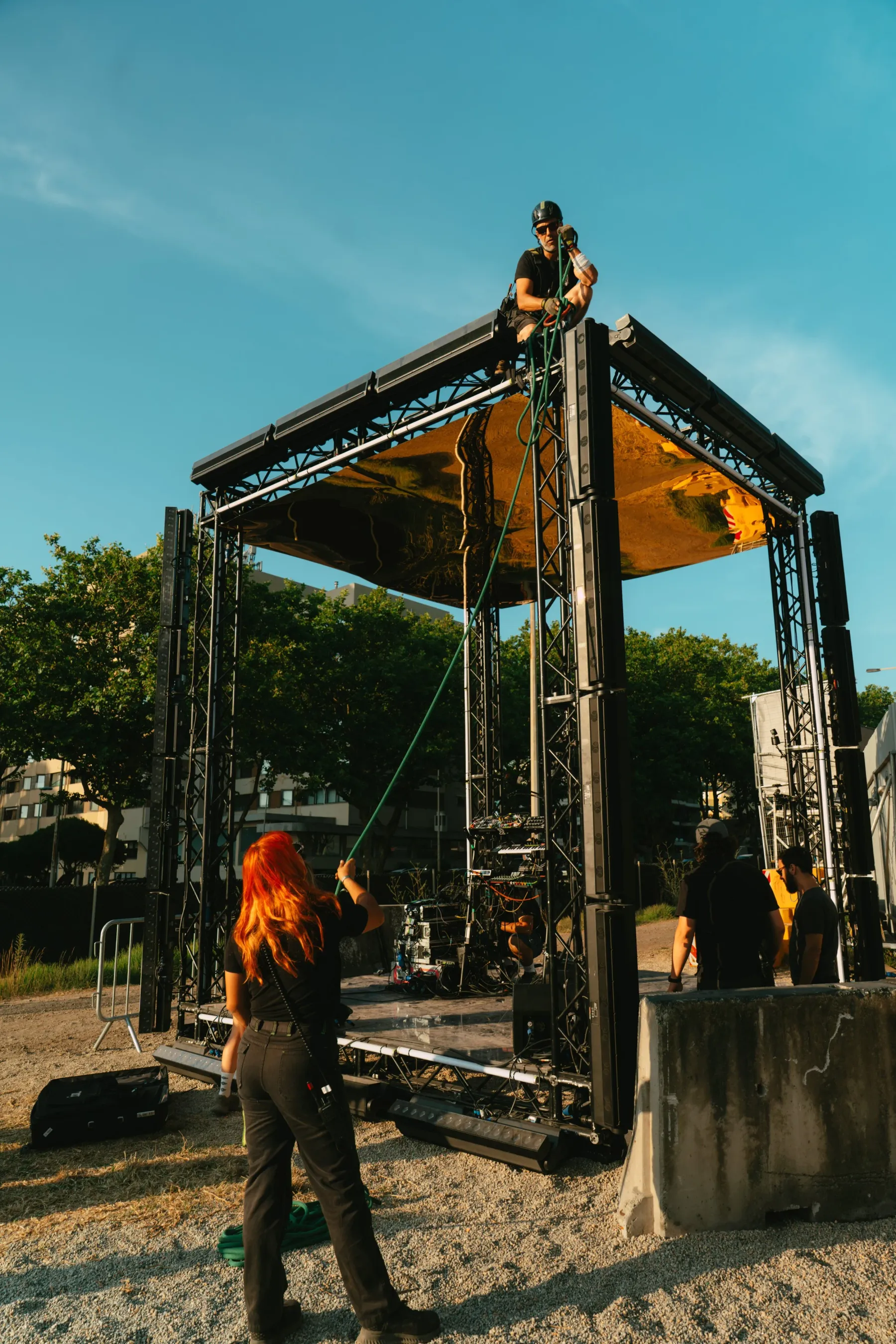
Testing the cabling stretch for arrival and departure
Sound
Usually Luis mixes front of house himself. Here we didn’t know if that would be an option, considering our height and movement. So we sent three stereo submixes, six channels in total to FOH:
01-02: VOX
03-04: SYNTHS
05-06: BASS
Hugo Valverde and João Moreira ran FOH and gave our mix a final mastering pass.
Our other worry was latency, and whether we’d hear a clean signal once the crane put us in front of the PA, since we started the show offstage. Gui stayed on his usual in-ear mix, straight from our RME interface. Luis had a small monitoring setup as a backup in case he couldn’t hear the PA. In the end he only used it for talkback with FOH.
Normally you walk towards the stage until you’re inside the range of the PA. Here we were carried into it. The crane lowered us in front of the main hang and suddenly we were surrounded by sound.
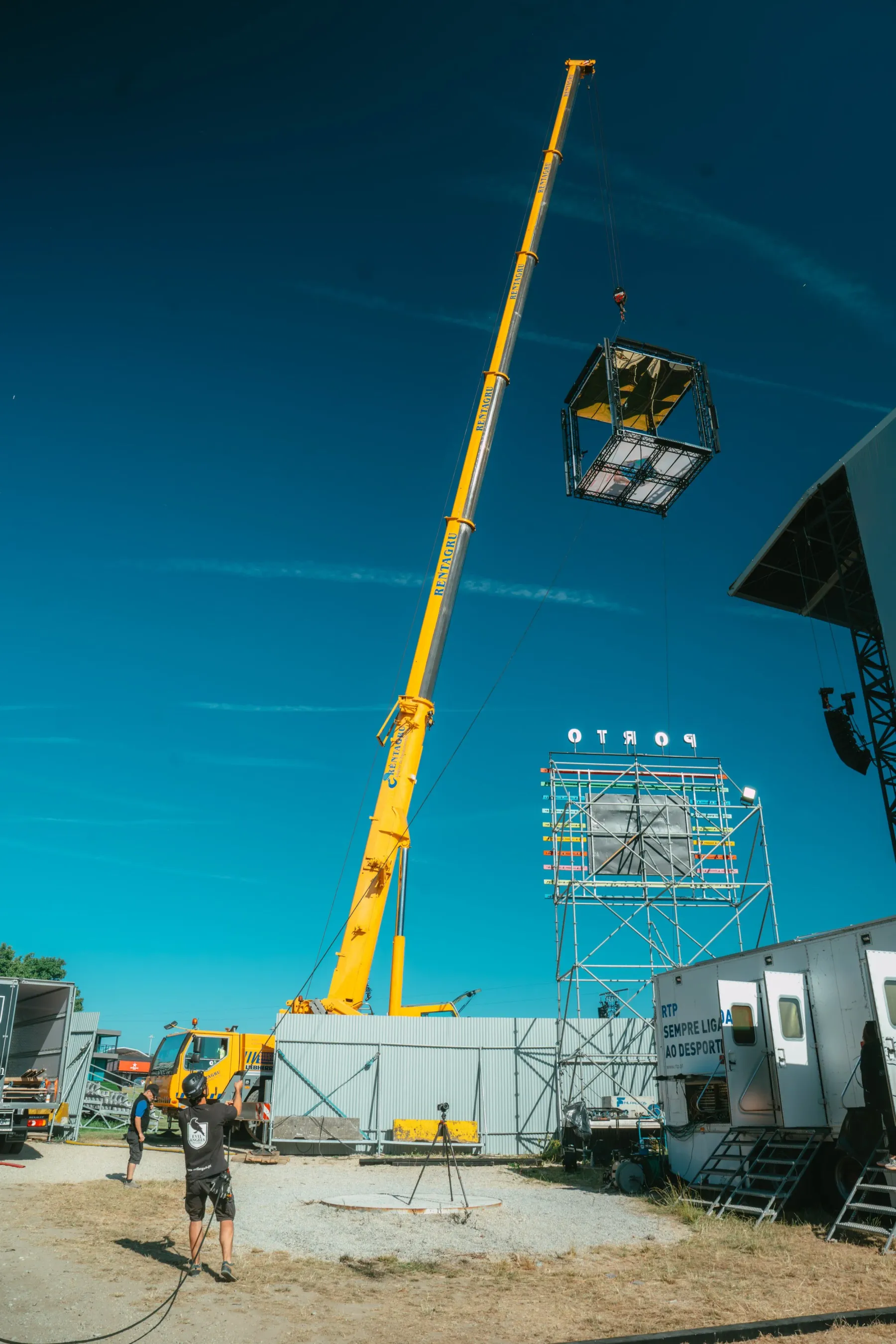
First test: from the landing pad, over the billboard and the stage, then down to the final position
Crane, rigging and safety
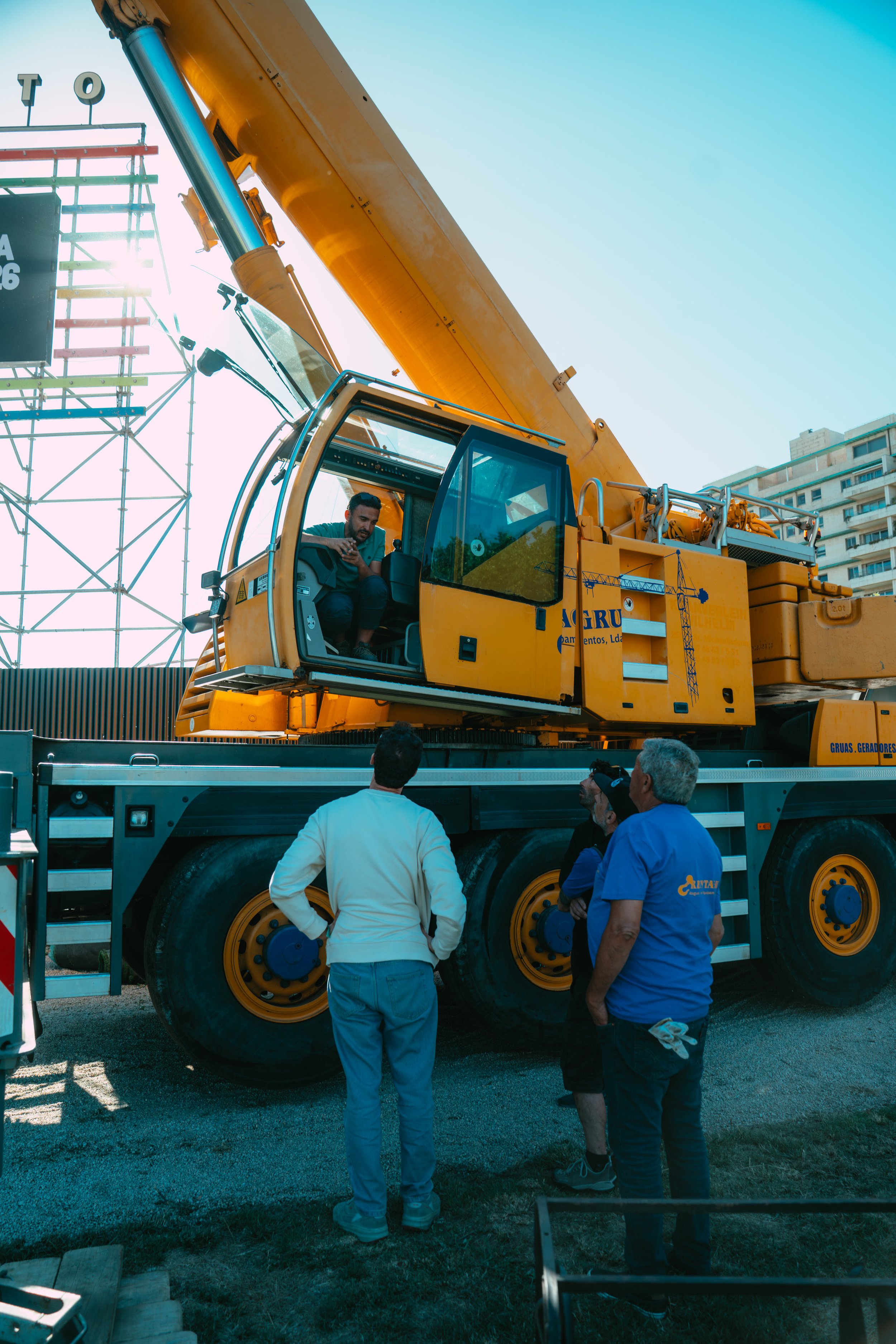
A crane over a festival crowd is as much a safety plan as a stage. Four teams made it work:
WePlan: engineering project for the festival grounds, including safety and evacuation plans
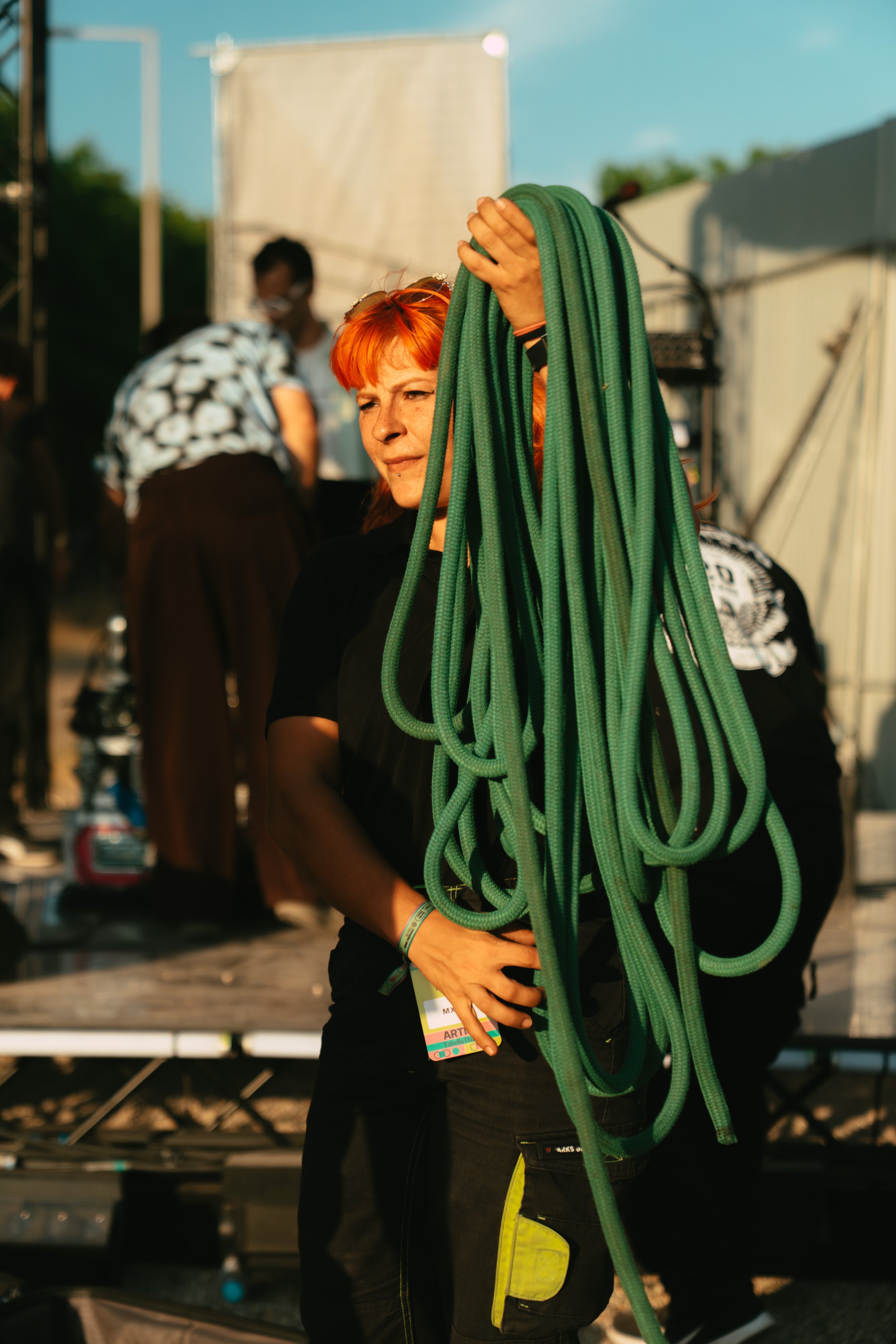
Primavera Sound Crew: the changeover after Massive Attack, bringing the crane into the main area and positioning the safety barriers
Rentagru: the crane, operated by Mr. Janeiro
Evil Angels: rigging project and safety, and the assembly of the cage. One of their riggers rode with us, hidden inside it
We were lifted from the back of the stage, climbed over it to about 30 metres, then came down to our final position: about 7 metres above the audience and 10 metres in front of the stage.
The show
Well, you had to be there. The second best thing is watching the film:
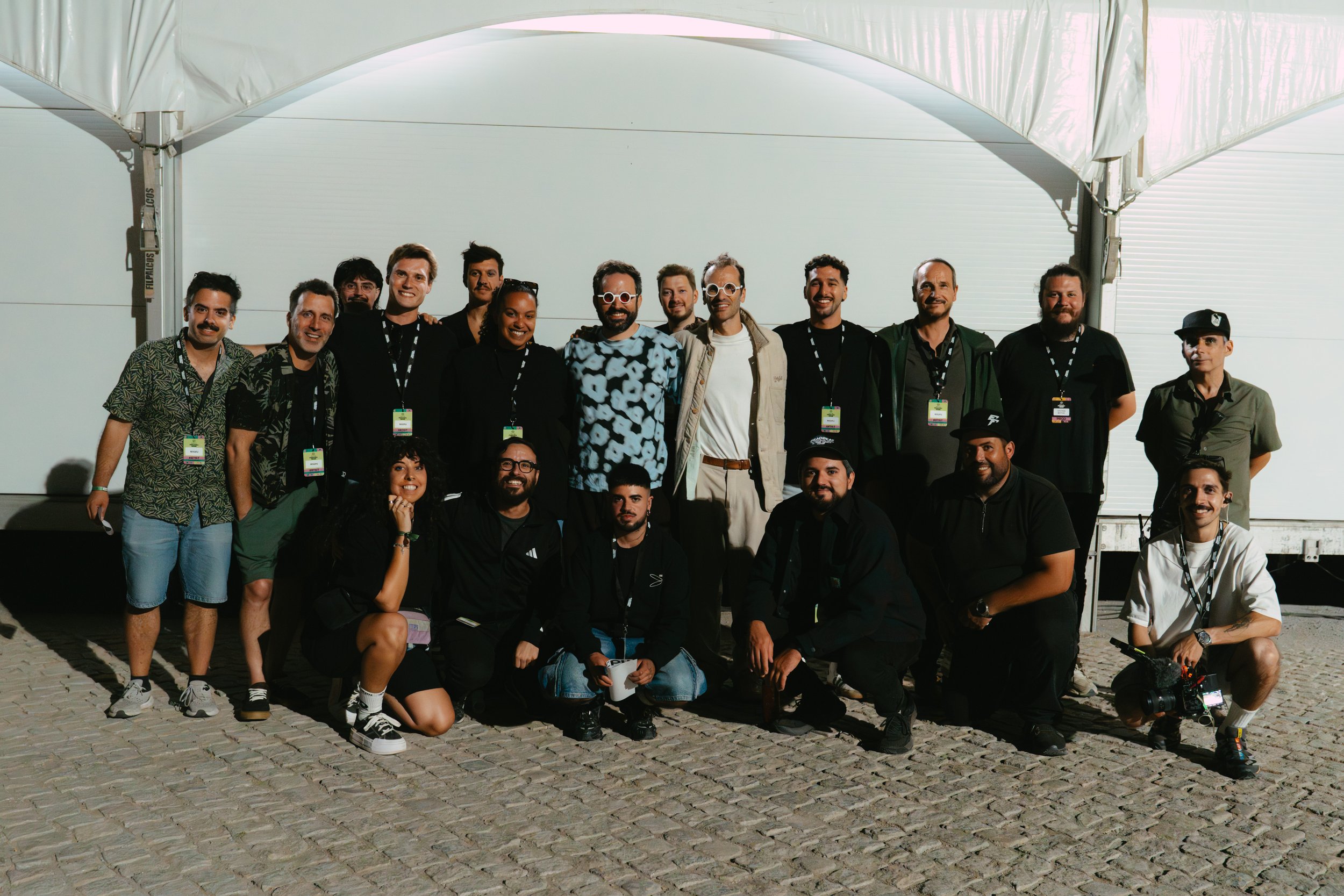
Ana Viotti led our content and video team. RTP directed the live broadcast for national television with fixed and mobile cameras, a cable cam and a drone, and shared their feed with us for the IMAG screens. Rui Clara Gomes edited and graded the film from all of that footage. Watch the full Live Over Porto video concert.
Credits
MXGPU Live Over Porto
Produced by: Underloop and Ao Sul do Mundo
Stage, lighting and visual design: Pavel Zmunchila
Creative operations manager: João Cardielos
Head of production: Nadine Saize
Head of photo and video: Ana Viotti
Technical consulting, camera and BTS: Diogo Miranda
Camera operators (RTP): Agostinho Gonçalves, Artur Pinho, Bruno Carvalho, Guilherme Alves, Luís Moya, Marcos Nunes, Paulo Matos, Pedro Couto, Pierre Passos
Canal 180: João Martins, Bautista Godoy, Francisco Osório, Joana Ferreira, Jorge Sousa
Broadcast recorder: Gonçalo Reis
Editing and colour grading: Rui Clara Gomes
Mobile content: Daniel Azevedo
Mixing and mastering for Video: Alexander Lazarevic
Audio FOH: Hugo Valverde, João Moreira
Audio and backline assistant: Luís Lucena
Lighting programming and operation: João Quintela
Lighting assistant: Isaac Veloso
Rigging project: Evil Angels
AV: Audioglobo
Engineering project: WePlan
Crane: Rentagru. Operator: Janeiro
Camera equipment: Pewpew, Sony Portugal, Maus da Fita
Media liaison: Liobhan Lignel
Management and booking: Luís Viegas, Ao Sul do Mundo and Roda Artists